


Comparison: Scented Candles vs. Diffusers for a Relaxing Home
Candles and diffusers both scent a room, but they differ in mood, upkeep, safety, and control. Here is how to choose the right one for each space at home.
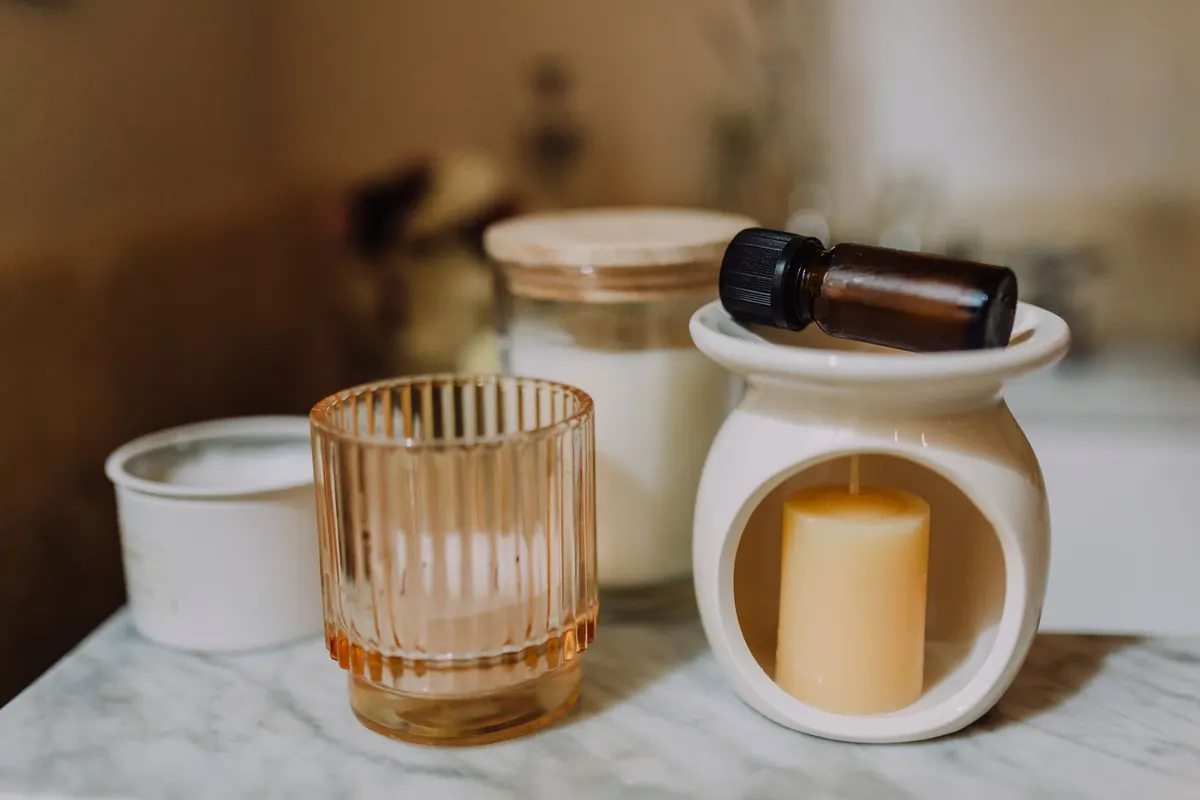
Some evenings ask for a flame. You strike a match, the wick catches, and within ten minutes the room smells of warm wood and something faintly sweet. Other evenings you want the scent to simply be there, quietly, without anyone tending it. That is the honest difference between a scented candle and a diffuser: not which one smells better, but which kind of evening you are setting up.
Both do the same job in different ways. One gives you a small ritual and a flicker of light. The other gives you a background note that keeps going while you cook, work, or sleep. Choosing well comes down to the room, your routine, who else lives with you, and how much upkeep you will genuinely keep up with.
How Each One Gets Scent Into the Air
A candle releases fragrance through heat. Scented oils are blended into the wax, and as the flame melts the surface, those oils evaporate into the warm air above it. The effect is local: strongest within a metre or two, drifting upward, fading within an hour or so of being snuffed out. Even unlit, a good candle carries a faint cold scent through the jar.
Reed diffusers need no flame and no electricity. A carrier oil holds the fragrance, and the reeds draw it upward, releasing it slowly at room temperature. It runs continuously, at a low, even level, for weeks. Electric ultrasonic diffusers add a third option: water, a few drops of essential oil, and a fine mist that carries scent through a room for as long as the cycle runs.
Ambiance: A Moment Versus a Mood
The candle's small ritual
Lighting a candle is an act, and that is much of its appeal. Trimming the wick, striking the match, watching the melt pool spread to the rim of the jar. The flame itself changes a room: it makes a space feel smaller, warmer, and more finished, which is why a candle works so well on a dinner table, beside a bath, or on a side table where you read. It signals that the working part of the day is over.
The diffuser's quiet background
A diffuser asks nothing of you once it is set up. That makes it the better choice for hallways, entryways, bathrooms, and small home offices, where a flame would be impractical, forgotten, or simply unseen. It also suits rooms you pass through rather than sit in. You notice a diffuser mostly when you leave and come back, which is exactly the effect many people want from a hallway or guest room.
Scent Strength, Reach, and Control
Candles build. Give one twenty or thirty minutes and the scent establishes itself, strongest in the room where it burns, with a little spilling into the next. Overshoot and it turns heavy: a large three-wick jar in a small bedroom can be too much, while a single tea light in an open-plan living room disappears entirely. Matching candle size to room size matters more than the label on the jar.
Reed diffusers are steady but modest. They hold a whole floor at a low level if placed somewhere with gentle air movement, and they are easy to fine-tune: flip the reeds to refresh the scent, remove a couple to weaken it, add more to strengthen it. Ultrasonic diffusers sit at the other extreme. They deliver a strong burst for thirty or sixty minutes, which is ideal before guests arrive, but the scent does not linger once you switch them off.
The Upkeep Each One Actually Asks For
This is where most people discover which option suits them. Candles are low effort but need attention every single time; diffusers are almost no effort but need a proper reset every few months.
For candles:
- Trim the wick to roughly 3–5 mm before every burn. Untrimmed wicks smoke, blacken the jar, and smell of soot rather than fragrance.
- On the first burn, let the melted wax reach the edge of the jar. Stop short and the candle will tunnel, wasting half the wax.
- Keep sessions to a few hours at a time and let the wax cool before relighting. Long burns overheat the jar and shorten the candle's life.
- Keep the wax clean. Wick trimmings, dust, and spent matches all end up in the melt pool and affect how it burns.
- Retire the candle when about a centimetre of wax remains, rather than letting the wick scorch the glass.
For diffusers:
- Flip the reeds once a week, and turn the whole bunch over rather than stirring them, so the saturated ends come to the top.
- Replace the reeds every few months. They clog with dust and stop drawing oil upward long before the bottle is empty.
- Keep the bottle out of direct sun and away from radiators; heat and light break down the fragrance.
- With ultrasonic models, empty and wipe the tank every few days, use cool water, and follow the drop count on the bottle rather than adding a generous splash.
Safety and Air Quality
Candle safety is simple but not optional. Never leave a burning candle unattended, and put it out before you leave the house or go to sleep. Keep flames clear of curtains, books, dried flowers, and anything that moves in a draught. A shelf above a radiator or beside a window that catches a breeze is a poor spot. Use a proper holder that will not tip, and keep matches, lighters, and lit candles out of reach of children and away from the edge of any surface a cat might land on.
Scented candles do produce a small amount of soot and some volatile compounds, especially with a long, untrimmed wick. A trimmed wick and a ventilated room keep this modest. If you have asthma, fragrance sensitivity, or a young baby in the room, test any new scented product in short sessions first and stop if it irritates. For anything related to a medical condition, ask a doctor rather than relying on a product label.
Diffusers remove the flame but not every risk. Essential oils are concentrated, so keep bottles and units out of reach of children and pets, follow the dilution instructions, and remember that some oils are not considered safe around cats, dogs, or birds. Check with your vet before diffusing regularly in a room your pets use. An ultrasonic diffuser left running all day in a closed room can also make the air feel heavy; thirty to sixty minutes at a time, with the door or window opened afterwards, is usually plenty.
Matching the Method to Your Day
A few situations sort themselves quickly:
- Weeknight bath or a slow dinner: a candle, for the light as much as the scent.
- A windowless bathroom that smells faintly of damp towels: a reed diffuser, working quietly all week.
- Working from home and needing a clear end to the day: a candle lit only after the laptop closes, so the scent becomes a cue.
- Entryway or hallway: a diffuser, since nobody is there to watch a flame.
- Guests arriving in half an hour: a short ultrasonic cycle, or a candle in the room you will actually sit in.
- A household with curious pets or small children: a diffuser on a high shelf, or no fragrance at all in the busiest rooms.
A Practical Way to Choose
Start with two purchases rather than six. One candle for the room where you actually sit in the evening, and one reed diffuser for the hallway or bathroom. That combination covers most of what people are looking for: a ritual where you want atmosphere, a background note where you want convenience.
Buy small first. A single jar or a modest diffuser lets you live with a scent for a week before committing to the large size, and it is far easier to give away something you do not love. Keep to two or three scents in the house at once so they do not collide, store candles with their lids on to protect the wax, and place the diffuser where you will walk past it rather than where you sit. The right choice is the one you will still be maintaining in March.
Photo: RDNE Stock project / Pexels